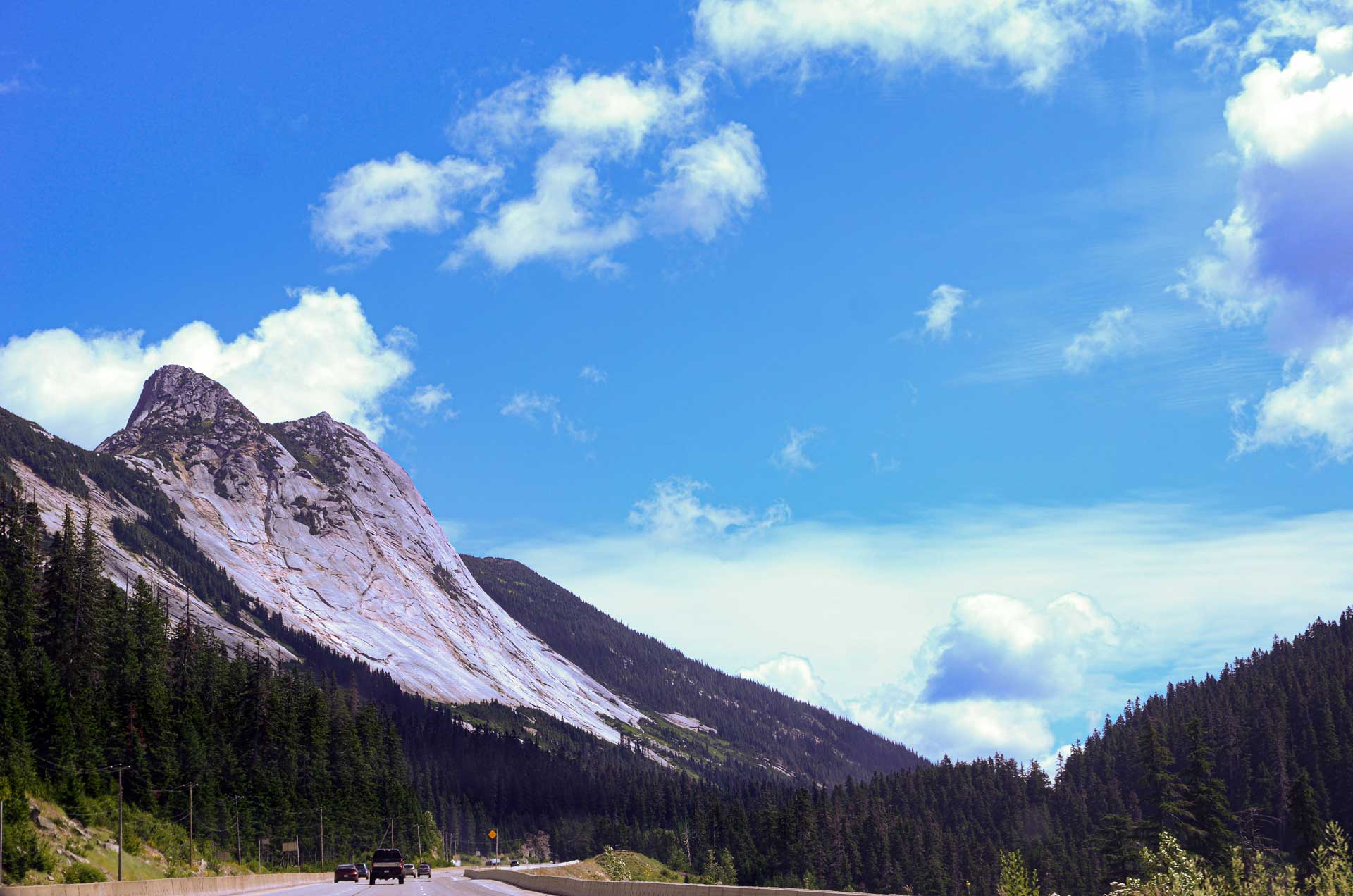
Towing a loaded trailer over the Coquihalla is a different job than pulling it down a flat highway. You've got long, steep climbs, even longer descents that cook your brakes if you're not careful, and mountain weather that can turn on you in July. If your rig is within your tow vehicle's limits and you know how to handle a mountain grade, it's very doable. If it isn't, or you'd rather not spend the day white-knuckling the wheel, that's exactly the kind of run we do every week.
Here's what actually changes when the pass gets involved.
What makes the Coquihalla different from regular highway towing?
Three things, mostly: grade, weather, and weight.
The Coq climbs hard out of Hope and doesn't really let up until you're well past the summit — that's a long, sustained pull, and a heavy trailer will find the weak spot in an underpowered tow vehicle fast. Then you turn around and come back down those same grades, and now the problem is heat: ride your brakes the whole way down and they'll fade right when you need them. Add in wind across the exposed stretches near the top and weather that can throw rain, fog, or worse at you even in summer, and it adds up to a drive that rewards preparation and punishes winging it.
What are the trouble spots?
The long descents are where most people get into trouble — brakes overheat because folks try to hold their speed down with the pedal instead of gearing down. That's what the brake-check pullouts along the route are for; use them, and know that they're there for a reason. The other spots to respect are the exposed, windy stretches up near the summit, where a tall trailer catches the wind, and any point where weather closes in and visibility drops. None of it is a problem if you're set up right and you're not in a hurry.
How do I tow it over the pass safely myself?
If you're going to run it yourself, the basics matter more here than anywhere:
- Know your numbers. Make sure your trailer's loaded weight is comfortably inside what your tow vehicle is rated to pull and stop — not right at the edge.
- Check your brakes and tires before you leave. Trailer brakes working, a breakaway cable that actually functions, tires (including the spare) in good shape and properly inflated.
- Gear down on the descents. Let the engine and transmission hold your speed so your brakes aren't doing all the work. Use the brake-check pullouts.
- Watch the weather and don't overdrive it. Slow down for wind, rain, and fog. There's no schedule worth chasing over a pass.
When does it make more sense to let a hauler take it?
Plenty of times, and there's no shame in any of them:
- It's your first time towing something big over a mountain pass.
- The trailer is bigger or heavier than your tow vehicle is really happy with.
- You've got a tight timeline and can't afford a problem on the road.
- Your trailer isn't plated — I hold a transport plate, so I can legally move a trailer that doesn't have its own plates on it.
- You just don't want to spend a good summer day fighting the Coquihalla.
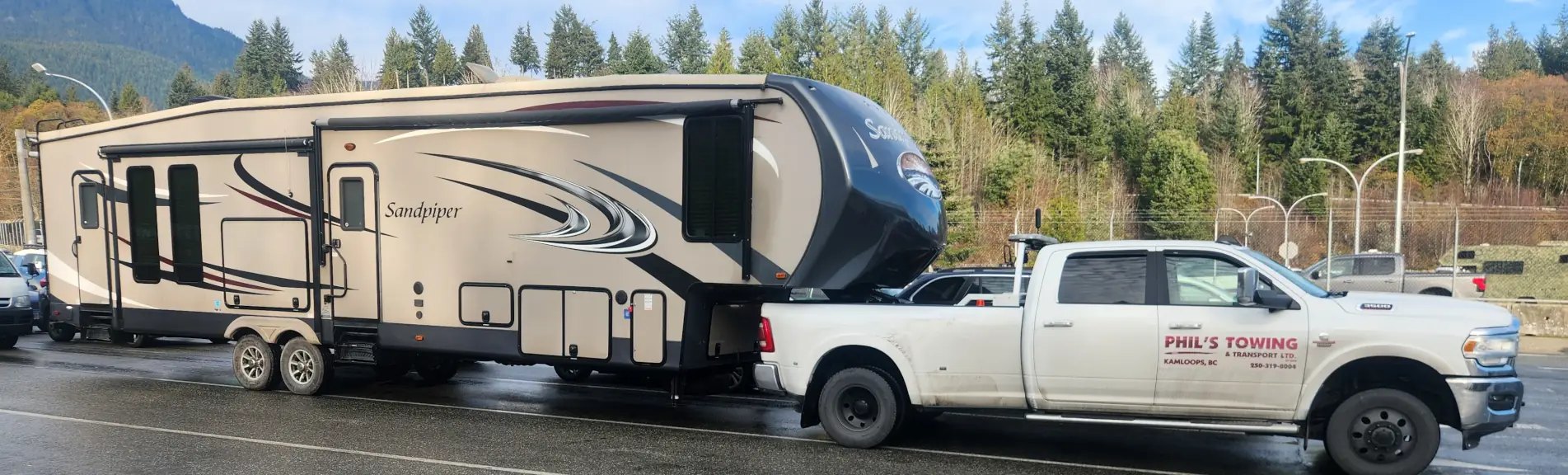
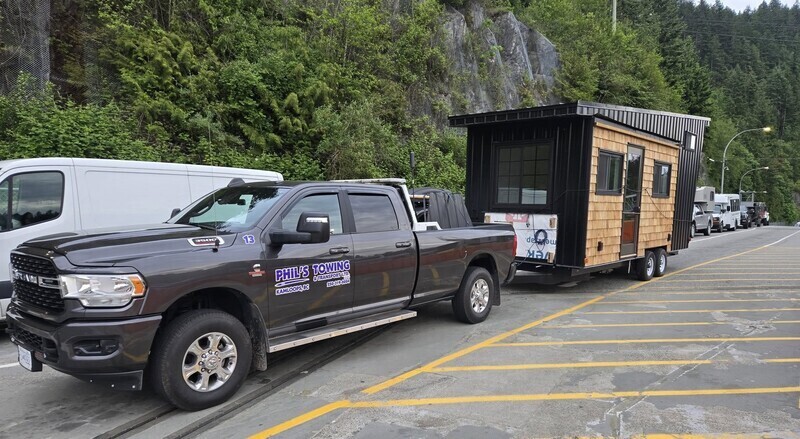
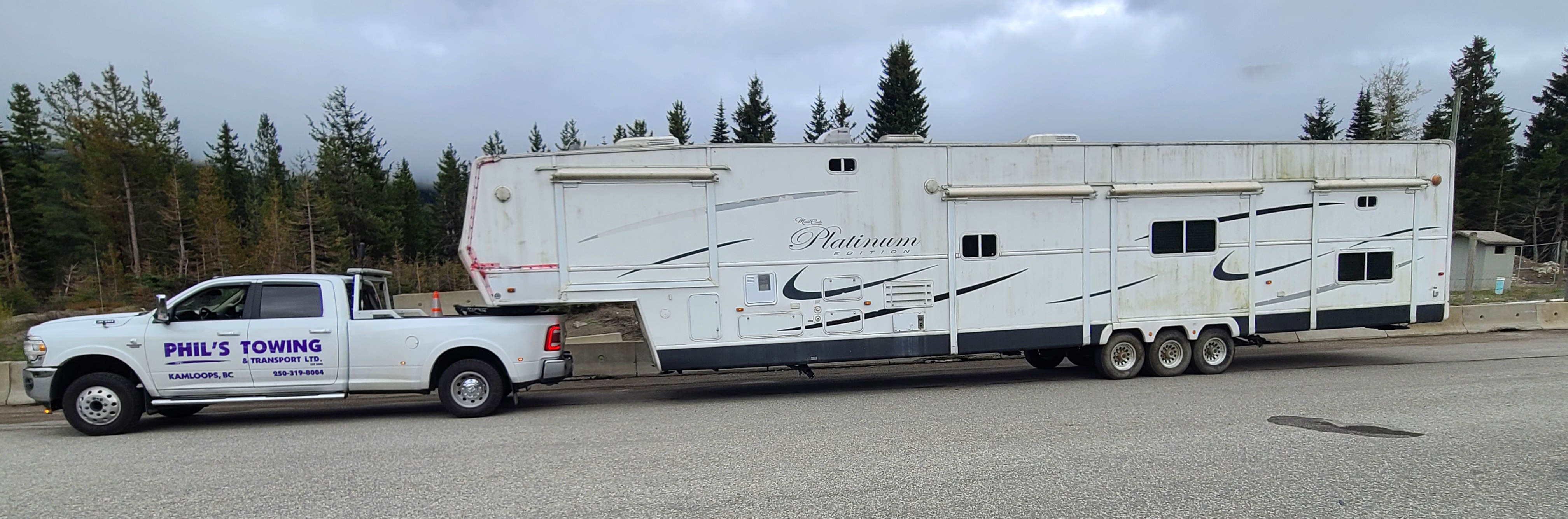
That's where we come in. Phil's Towing has been hauling trailers of every kind — bumper pull, 5th wheel, gooseneck, livestock, equipment — across BC since 2010, and the Coquihalla is a road we run in both directions every week. We know where the wind comes across, where the brake checks are, and where you can pull off safely if something needs sorting mid-haul. Fully insured, and when you call you're talking to the person who's going to do the job.
Frequently asked questions
Can you haul my trailer over the Coquihalla for me? Yes — that's a regular run for us, loaded or empty, local or long-distance. Call and we'll work out the route and timing together.
What if my trailer doesn't have plates? No problem. I carry a transport plate for a small fee, so I can legally move an unplated trailer.
What hours can I reach you? We answer our own phone 7 days a week, 6 AM to 7 PM.
Thinking about the pass this summer?
Whether you want it hauled or just want a second opinion on whether it's a job for you, give us a call.